


Amata Corporation PCL announced its financial results for the first half of 2026, recorded total revenue of 8.06 billion baht, representing a 39.86% year-on-year increase.
Net profit for January-June 2026 skyrocketed 167.01% to 3.12 billion baht, underscoring resilient demand across its industrial estates.
For the second quarter (Q2) alone, total revenue reached 4.06 billion baht, up 71.25% year-on-year, while net profit surged 564.62% to 1.79 billion baht.
This robust growth was heavily underpinned by land transfers and property sales revenue totaling 2.20 billion baht.
The company continues to advance its Industrial Cities to accommodate rising FDI and next-generation industries, running parallel with its target to achieve carbon neutrality by 2040.

Robust Land Transfers and Profitability
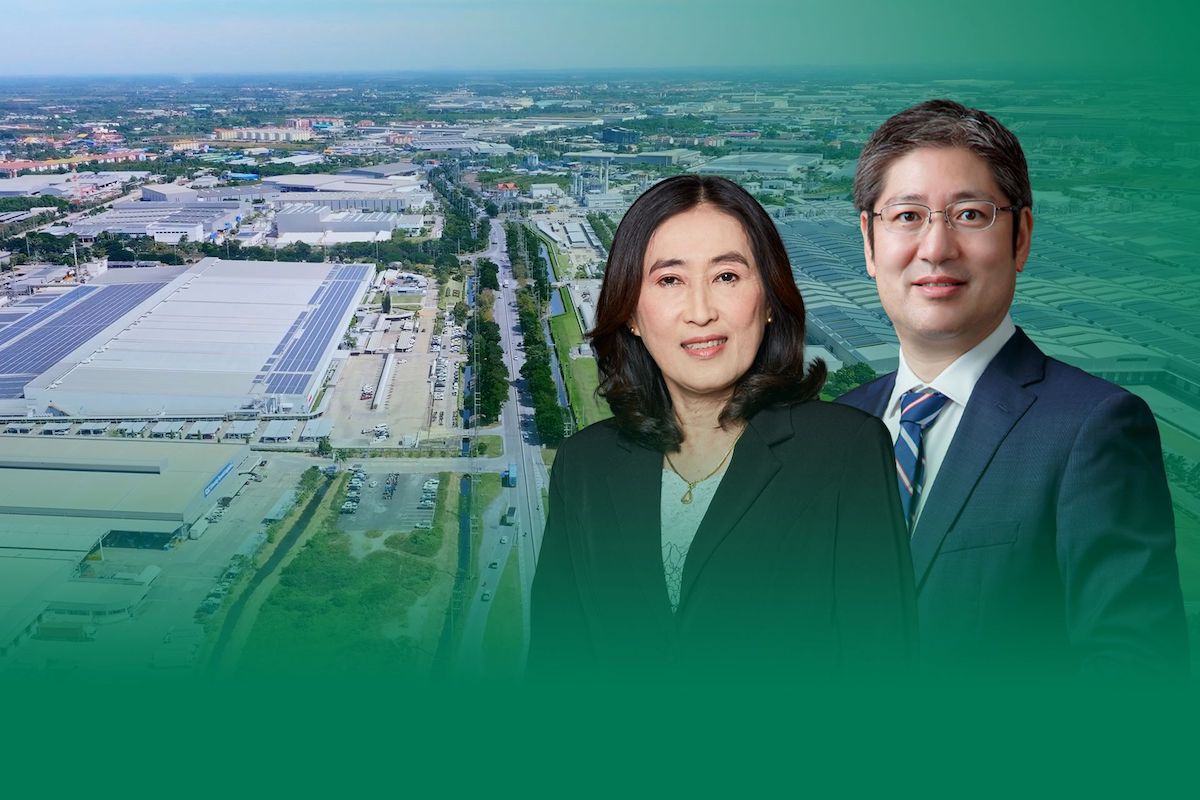
Ms Dendao Kamolmas, Chief Financial Officer of Amata Corporation PCL, revealed that the strong Q2 performance was propelled by land transfers in high-margin phases within Chonburi province, expanding property business and coupled with improved gross profit margins at Amata’s industrial estates.
During the second quarter, Amata recorded industrial land ownership transfers totaling 288 rai, valued at 2.20 billion baht—a 131.07% increase compared to 172 rai transferred in the same period last year.
Of the total Q2 land transfers, 271 rai were in Thailand and 17 rai in Vietnam.
Furthermore, the gross profit margin from property sales rose by 66.16% year-on-year to stand at 46.87%, on average across the industrial parks in Thailand and Vietnam.
Additionally, the company recognized a profit of 366 million baht from the disposal of its investment in a subsidiary in Vietnam Amata Service City Long Thanh 2 Company Limited (ASCLT2).
Utilities and Rental Growth
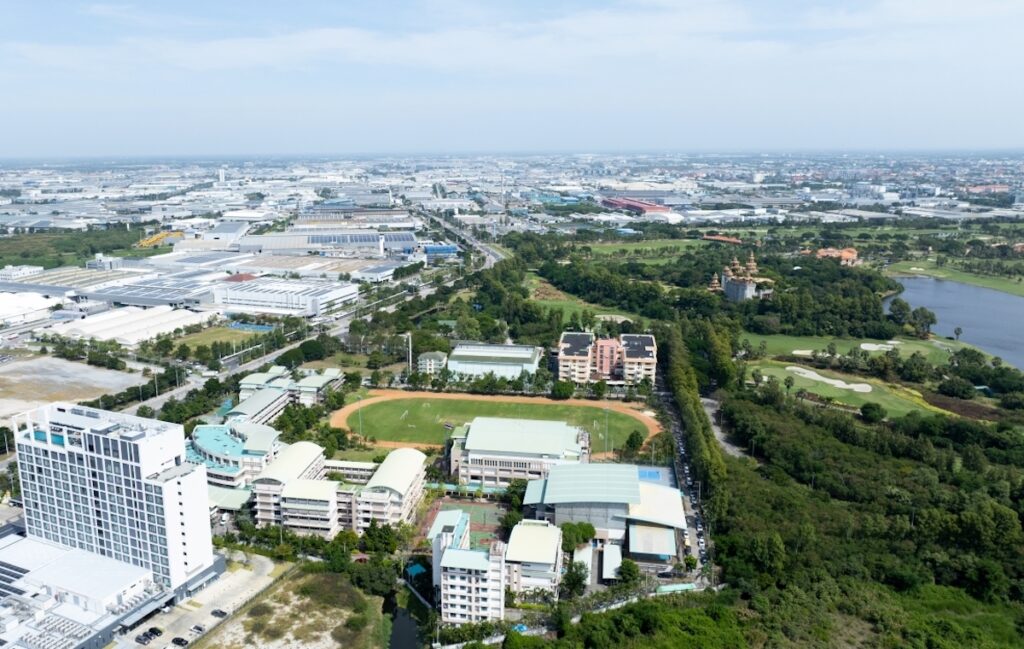
Utility services continued to serve as a steady recurring revenue stream, generating 1.15 billion baht—an increase of 43 million baht or 3.87% year-on-year—driven by rising demand for infrastructure services.
Revenue from Ready-Built Factories (RBF) for rent rose by 10 million baht, or 4% year-on-year, to 266 million baht, supported by expanded leased areas.
Financial income from financial institutions stood at 27 million baht, up 9.51% year-on-year, while other income reached 48 million baht, marking a 68.01% increase.
However, share of profit from investments in associates and joint ventures dropped 1.79% year-on-year to 236 million baht.
This was primarily due to lower profit shares from the power plant business and foreign exchange losses, though natural gas sales showed improved profit contributions.
Economic Headwinds and Investment Trends
Mr Yasuo Tsutsui, Chief Executive Officer Industrial Estate Thailand and Acting Chief Marketing Officer, noted that the global economic landscape in Q2 2026 remained pressured by geopolitical tensions and volatile energy prices, which drove up inflation.
Thailand’s Q2 economy slowed due to higher energy costs, a drop in tourist numbers, and softer industrial production in certain sectors.

Mr Tsutsui added that the Thai economy warrants close monitoring across five key factors: US trade policies, tourism, cost of living, government stimulus measures, and El Niño weather conditions.
Amata remains steadfast in driving its business under its integrated industrial city development strategy, prioritizing resource efficiency, clean energy, and the development of a robust, future-ready business ecosystem that supports new investors, adapts to evolving industry needs, and drives long-term sustainable growth.
The group aims to achieve carbon neutrality by 2040 and cut greenhouse gas emissions per unit of operational area by 30% by 2030.
